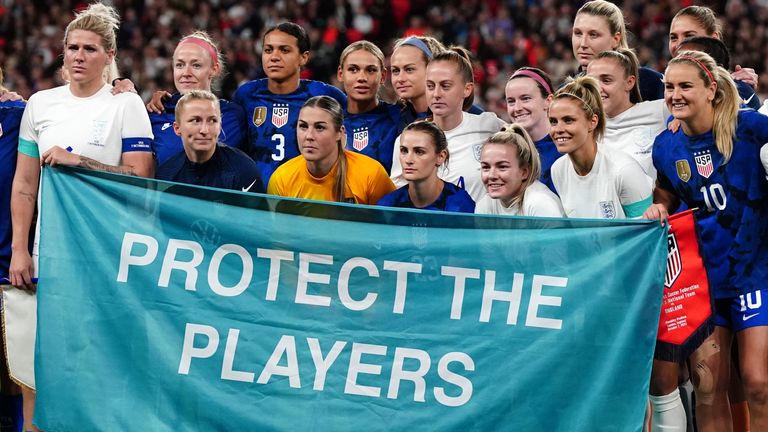
⚽ Women’s football in England has never been more visible.
That visibility is deserved. It reflects the quality of the players and the game’s progress. But visibility changes the risk environment, and the hidden cost of that exposure is only now becoming clear.
In recent years, female footballers in England have faced stalking, racist abuse, sexualised harassment and targeted hostility — both online and in person. Some cases reach court. Many do not.
Taken individually, these incidents can appear isolated.
Taken together, they reveal a pattern.
🏛 What I Learned in Parliament
After the murder of Jo Cox MP, I established and led a specialist threat assessment capability inside Parliament. I was responsible for the protective security of every sitting politician in the country.
One of the hard truths we had to confront was this: women were targeted differently.
Female MPs received more sexualised threats. More fixation disguised as admiration. More entitlement-driven contact. More behaviour that began quietly and escalated over time. Male politicians were abused, often aggressively. But the tone and trajectory directed at women were distinct.
Across the years that followed, the private conversations were strikingly similar:
- Sleepless nights.
- Waking after hearing a noise outside.
- Family members are becoming anxious.
- Increased vigilance in public spaces.
- Suffering in private while putting on a brave face in public.
More than once, I’ve sat across from resilient, high-performing women who were holding it together on the outside, only to break down once the door was closed.
When I speak to female footballers now, I hear the same language.
Different setting. Same behavioural pattern.
🎯 Fixation Rarely Announces Itself
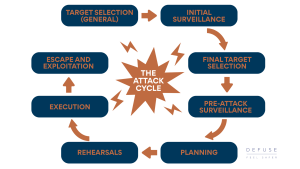
Stalking and targeted harassment rarely begin with a threat. They begin with repetition.
- Repeated messages.
- Increasing familiarity.
- Attempts to personalise.
- Entitlement when attention is not returned.
- Boundaries tested, slowly at first.
By the time someone appears repeatedly at a match or references private details, the behaviour has usually been developing for some time.
The risk is not always in the loudest comment.
It is in the direction of travel.
📚 Recent research published in the European Sport Management Quarterly put numbers to what I see in practice. Researchers examined three separate incidents involving a former professional footballer targeting women in the game. Each time, a single post triggered waves of coordinated abuse — misogynistic, racialised, and sexualised — that spread across platforms and escalated in the real world. In the case of pundit Eni Aluko, the abuse was severe enough that she left the country out of fear for her safety.
That is not trolling.
That is targeted harm with real-world consequences.
A separate study, focusing on TikTok, found that sexist and misogynistic comments appeared on every post featuring female footballers on official club accounts. Most went unmoderated.
This is not a fringe issue.
It is routine.
⚖️ The Gendered Reality in Football
Female players are regularly subjected to sexualised and deeply personal commentary alongside performance criticism. Persistent direct messaging that crosses into imagined intimacy. Racial abuse layered with misogyny. Behaviour written off as over-enthusiastic support when it should be treated as a warning sign.
Some of this comes from anonymous accounts online.
Some of it, uncomfortably, comes from within football’s own environment — from men involved around the game who blur boundaries and minimise early indicators.
When behaviour is normalised, escalation becomes easier. In Parliament, ignoring low-level behavioural indicators created vulnerability. Football is making the same mistake.
🤖 Monitoring Is Not the Same as Assessment
Clubs have invested in monitoring systems and content filtering. Players should not have to read every abusive message sent to them. That is a reasonable starting point, but it is only that — a starting point.
Filtering content is not the same as assessing behaviour.
- An algorithm can identify certain words.
- It cannot assess persistence.
- It cannot interpret entitlement turning into obsession.
- It cannot judge when admiration becomes fixation.
Player care and welfare teams carry considerable responsibility. They are often the first to hear when something feels wrong. But behavioural threat assessment is a specialist discipline — it involves understanding fixation, escalation patterns, grievance, and proximity-seeking. These are the subtle indicators that come before a serious incident. Player care staff are not trained, qualified, or expected to manage complex stalking or fixation cases alone. Nor should they be.
Goodwill, common sense, and monitoring software are not substitutes for experienced judgment when behaviour begins to shift.
📉 Fewer Resources, Greater Exposure
The women’s game still operates with fewer resources than the men’s. That means fewer dedicated personnel focused on behavioural risk, fewer structured briefings, and fewer proactive reviews around travel and accommodation.
Yet the public profile of players continues to grow.
When exposure rises faster than specialist expertise, that is where risk takes hold.
🛡 The Work Already Being Done — And What’s Missing
This week, I worked with one of the country’s leading Premier League clubs. I spent time with their U21s, the men’s first team, and the women’s squad — covering personal safety, online security, home security, and the threat posed by fixated individuals.
These are elite athletes. Talented, driven, and carrying a level of public visibility most people will never experience.
- Millions of followers.
- Every move is watched.
- Home locations pieced together.
- Daily routines logged by strangers they have never met.
Most of them had never had a proper conversation about what that actually means for their safety.
My career has taken me from investigating organised crime networks to building the UK’s first specialist threat assessment team inside Parliament. I have protected members of the Royal Family, Government Ministers, and prominent public figures from people whose interest in them became dangerous. What I learned investigating criminals and protecting politicians holds true in football — obsessive behaviour follows predictable patterns, and those patterns, if you know what to look for, give you time to act before something goes wrong.
By the end of our sessions, the players were not just aware — they were thinking differently. That is the whole point.
This club did not wait for a crisis, a prosecution, or a headline. They recognised that rising visibility brings rising complexity and acted early. Others would benefit from following that example.
🗣 The Conversation Football Needs to Have
Women’s football in England has grown rapidly. The sport’s understanding of behavioural threat risk needs to grow at the same pace.
This is not about creating alarm.
It is about acting before the alarm sounds.
Recognising escalation early.
Encouraging players to report concerns without making them feel they are overreacting.
Looking beyond individual comments to patterns of behaviour.
Making sure families are not left to manage anxiety on their own.
The patterns are already there. The question is straightforward: are you acting early, or will you wait until you are reacting?
If you are responsible for player welfare at a Premier League, Championship, or elite sports organisation, feel free to get in touch.