

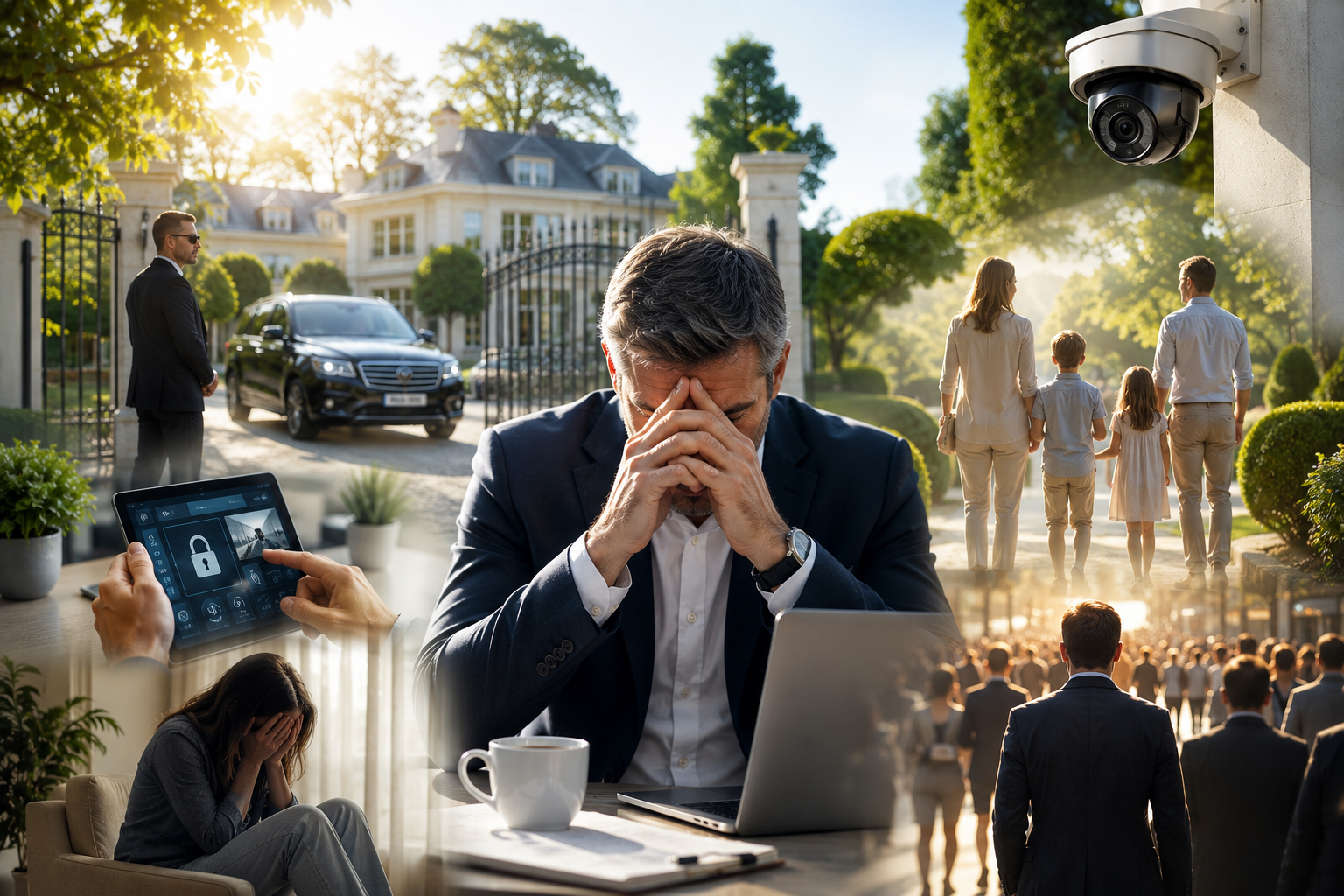
Why feeling unsafe can be as damaging as being unsafe
Most people assume a threat begins with violence.
It usually starts much earlier.
???? A cancelled appearance.
???? A different route home.
???? A child quietly removed from social media.
???? A principal who now scans every room before walking in.
That is how modern threats work. They change behaviour long before they ever turn physical.
???? Security does not always create safety
For prominent families, family offices and public figures, this is becoming one of the least understood consequences of persistent threat exposure.
Security conversations still tend to focus on:
• physical protection,
• access control,
• incident response.
Those things matter. They only address part of the picture. People can be heavily protected and still feel unsafe.
Over the years, I have worked with individuals who appeared outwardly resilient and successful, yet were privately exhausted by the weight of being targeted.
Some had become hypervigilant. Others had withdrawn from social life. A few had begun to distrust almost everyone around them.
By the time we were called in, the threat had already done its work.
???? The damage often begins long before violence
A common mistake among advisers is assuming that if no physical attack has occurred, the harm must be limited.
That is rarely the case.
Stalking, harassment, reputational attacks and persistent unwanted attention create real psychological strain — particularly when intent is unclear, and escalation feels possible.
It is the uncertainty that does most of the damage.
???? A single hostile message is unpleasant.
???? Hundreds over several months become something else entirely.
People start anticipating contact.
☎️ Every unknown number feels like a possible problem.
???? Every comment online feels personal.
???? Every unexpected knock at the door raises the pulse.
Living in that state is exhausting.
???????????????? The impact rarely stays with the principal alone
For family offices and the advisers around them, the consequences rarely stop with the individual being targeted.
Spouses, children, household staff, and wider professional teams also absorb the pressure.
✈️ Travel plans change.
???? Public engagements quietly fall away.
⚖️ Decision-making becomes more cautious — sometimes impaired altogether.
I have seen the emotional effect of a threat cause more disruption to a family than the practical risk ever did.
???? AI and social media have intensified the problem
False narratives, impersonation, manipulated images and coordinated online hostility now spread quickly and at scale. Even when allegations are false, the burden of managing them is very real. The public often assumes that wealthy or high-profile people simply become accustomed to it.
They do not.
Most clients, regardless of wealth or profile, want the same straightforward things:
• privacy,
• normality,
• and the ability to live without fear.
When that begins to erode, the consequences are significant — and often invisible to outsiders.
???? One of the clearest warning signs is behavioural change
Are they:
• avoiding events that they would normally attend?
• withdrawing from public life?
• sleeping properly?
• becoming suspicious or isolated?
• making decisions based on fear instead of judgment?
These questions often tell you more than the threats themselves.
????️ Good threat management is about more than preventing violence
It reduces uncertainty. It restores confidence. It helps people regain a sense of control over their own lives. That requires more than additional guards and cameras.
It requires:
• calm assessment,
• clear communication,
• behavioural understanding,
• and practical support.
Above all, it requires recognising that emotional harm is part of the threat picture—not a secondary consequence sitting alongside it.
The strongest practitioners understand this instinctively:
Helping a client feel safer is an operational requirement.
When people feel constantly unsafe:
• their judgement shifts,
• their routines shift,
• their relationships shift.
In some cases, their lives quietly shrink around the threat.
Final thought
⚠️ The greatest damage is rarely the attack that happens. It is the life people stop living while waiting for it.


