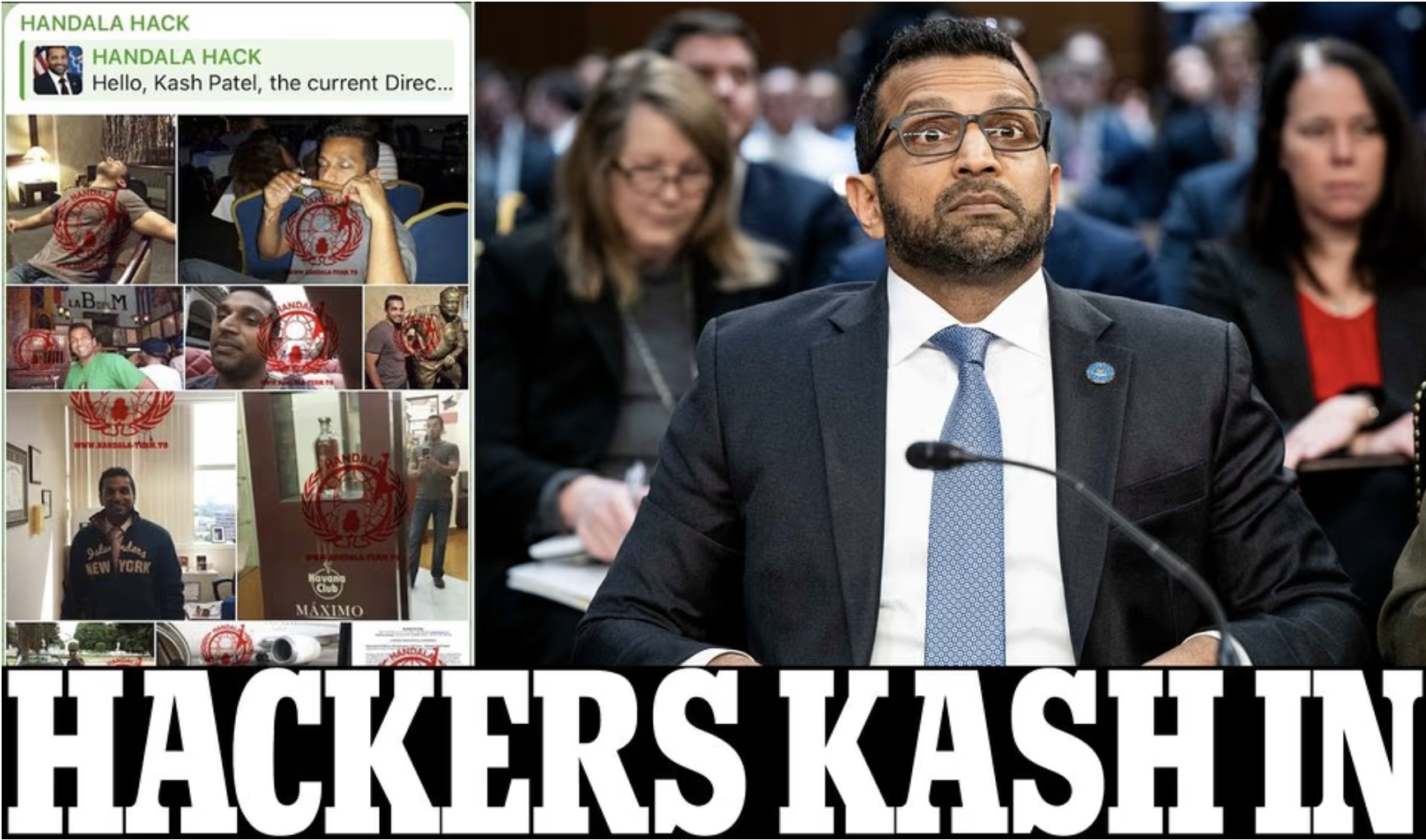
This morning, it emerged that Kash Patel — Director of the FBI — had his personal Gmail account breached by an Iranian-linked hacking group called Handala. Private photos, personal emails and his CV are now sitting online for anyone to find.
The hackers were blunt about it: “If your director can be compromised this easily, what do you expect from your lower-level employees?”
It’s an uncomfortable question. But it’s the right one.
This Wasn’t Some Sophisticated Attack on Government Systems. That’s the part most of the coverage is missing.
Handala didn’t breach FBI infrastructure. They didn’t penetrate classified networks or crack government encryption.
They got into a personal Gmail account — the sort any of us have — that happened to belong to America’s most senior law enforcement official.
The stolen material goes back to 2010. Emails, personal photographs, and correspondence built up over more than a decade, sitting in an account that clearly hadn’t been looked at seriously in years.
This is the gap that catches people out. Even the most senior, supposedly protected individuals. You can have excellent corporate security and still be completely exposed through your personal digital life — simply because nobody ever thought to check it.
The Threat Most People Never Consider
I’ve spent decades working with people whose safety matters — politicians, members of the Royal Family, senior executives and, more recently, UHNW individuals and family offices.
The pattern is always the same.
People invest in the visible stuff. Alarm systems. Security drivers. Physical protocols. Some have full protection teams around them. And yet their personal email accounts are sitting on servers breached years ago, their mobile numbers are freely available on data broker websites, and a straightforward open-source search of their name turns up information that could be used to manipulate, embarrass or target them.
An adversary doesn’t need to be particularly sophisticated. They just need to be patient. The information is often already out there, waiting to be found.
Three Things You Can Check Right Now
Before engaging any professional help, here are three things to do in the next 10 minutes.
- Search your email address on haveibeenpwned.com. It’s free and takes thirty seconds. It checks whether your email has appeared in known data breaches. Many people discover their credentials were compromised in incidents they never knew had happened — sometimes years ago.
- Google yourself properly. Not a quick vanity check. Go several pages deep. Search your name alongside your email address, your phone number, and your company name. Ask yourself honestly what a stranger with bad intentions could piece together from what they find.
- Search your name on a data broker site such as Spokeo or WhitePages. These platforms aggregate personal information and make it available to anyone willing to pay a small fee. Your address, phone number, family connections and professional history may already be sitting there, compiled and ready.
What you find may well surprise you. It surprises most of the people I work with the first time we go through it together.
Why the Patel Case Matters
Not because it reveals anything new about how these attacks work. Breaching personal email accounts has been standard tradecraft for years. Iranian-linked groups have targeted senior American officials repeatedly — Patel himself was reportedly told about a previous breach back in late 2024.
It matters because of who the victim is.
If the Director of the FBI — with the full weight of American intelligence behind him — is walking around with a vulnerable personal Gmail account that ends up published online, every high-profile individual should be asking themselves a straightforward question: who is looking at my digital footprint right now, and what are they finding?
What a Proper Digital Exposure Assessment Actually Covers
A professional assessment goes considerably further than anything you can do yourself.
It examines your personal email accounts and breach history across known databases. It looks at the publicly available open-source information about you, your family, and your close associates. It identifies social engineering vulnerabilities — the kind of detail an adversary could use to manipulate someone close to you, or to craft a convincing approach. And it maps your overall digital footprint so you can see clearly and honestly what you’re actually dealing with.
The aim isn’t to alarm you. It’s to give you an accurate picture so you can make informed decisions about where the real risks sit.
Most people, when they see the results, wish they’d done it sooner.
The Honest Truth
The question isn’t whether your information is out there. It almost certainly is. The question is whether you know what’s exposed — and whether you’re doing anything about it.
Kash Patel is the Director of the FBI. He now knows exactly what’s out there on him, because someone else made that decision for him and published it for the world to see.
You’d rather find out quietly, on your own terms.
Find out what’s already visible about you → Digital Exposure Assessment
Philip Grindell is the founder and CEO of Defuse Global, a boutique threat investigation and crisis management consultancy. A Chartered Security Professional and author of Personal Threat Management, he is among fewer than 300 people worldwide recognised at that level in his field.